Canadian reflections from an expatriate
By Dorothy Cummings McLean
March 20, 2012
Dorothy Cummings McLean
Another airplane. Another airport. Another customs official. This one asked questions. European ones rarely do.
“Where have you come from?”
“Glasgow, but I started in Edinburgh.”
“And what is the purpose of your visit to Canada?”
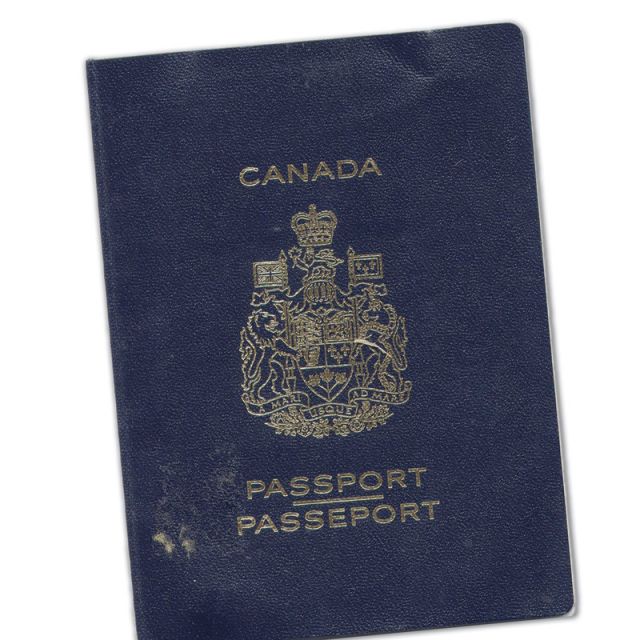
I must have been asked this last year, but the question carried the shock of novelty. My passport is Canadian. I am Canadian born and bred. But, sure enough, the permanent address I carefully inked on the flight card is not Canadian. I live elsewhere, home is where the heart is, and my heart was in an old stone building outside Edinburgh.
“I’m visiting my parents,” I replied.
The customs official nodded and wished me a nice visit. I thanked him, collected my suitcase and was collected in turn by my parents and my seven-year-old nephew. Nephew and I clambered into the back seat, momentarily sharing kid status together. It was March break, but he was wearing a black suit and tartan tie.
“Do you have a job interview?” I asked him.
“No.”
“Court date?”
“He changed to meet you at the airport,” said his grandmother, and I was touched by such filial respect. But then the suit and tie came from Edinburgh, too, I recalled, souvenirs of his Christmas visit to me and Uncle Mark. When I was a child, I envied my schoolmates with immigrant parents and overseas relations; they often went overseas on holidays. Now I am an overseas relation myself and host family holidays overseas.
In Canada we hear many stories of those who have immigrated to Canada; our airwaves, newspapers and literature are full of them. Not surprisingly, we hear fewer stories of those who have left. We know all about how strange Canada — or Toronto — can be for a new immigrant, but we know less about what strikes a returned expatriate. This time I returned to Canada with my travel journal. And into it I have been writing everything that strikes me.
The first thing is the Canadian accent or, to be precise, the accent of people who were born or grew up in southern Ontario. We talk a lot about how multicultural Toronto is, but Toronto shares this feature with most of the big cities of the English-speaking world. What is unique about Canadian cities is that they have an awful lot of Canadian-sounding people in them. As I sat in a café on Roncesvalles Avenue, I was not struck by the two elderly men chatting in Polish, for Polish is currently the second language of Edinburgh. I was struck by the woman who cried out a greeting to a friend as he entered. There it was, the Canadian accent.
The second thing is the weather, which is completely unpredictable and revolves around May 24. It is only March, but it looks like May: it’s incredibly warm, birds are singing and my mother tells me that the crocuses are already up. However, as everyone keeps repeating, there is still a danger of frost. There is always a danger of frost until May 24. Nobody in Scotland ever mentions May 24.
The third thing is children playing in the street. I do not often see children playing in the streets of Edinburgh, although I occasionally see them kicking soccer balls in fields. But the early spring seems to have brought out Toronto’s children in veritable flocks. They are in the road playing simplifed forms of baseball and hockey. They signal danger, as Toronto’s children have for generations, with sudden, sharp cries of “CAR!”
Hockey is itself the fourth thing, and in Britain I have to suppress a giggle whenever I see athletic young men with their field hockey sticks. Ice hockey is so rarely thought of in Britain that when I mention it I have to call it ice hockey. Here, of course, ice hockey is hockey, and it is serious business.
“It’s been a terrible season,” moaned a Toronto café-bar owner when I asked why a neighbouring café-bar owner had cut his business hours. “The Canadiens aren’t even in the playoffs and it’s not looking good for the Leafs.”
At least, I think that’s what he said. The idea that the economic fortunes of local businesses depend on the NHL momentarily stunned me.
And that brings me to the fifth thing, which is the survival of some landmarks and the destruction of others. It seems that Toronto is constantly being torn down and built up. It is both melancholy to walk through familiar streets and see what has disappeared. But some landmarks hang on in and out of season, as I was glad to discover when I went to the Oratorians’ 11:30 a.m. Sunday Extraordinary Form of the Mass.
After Mass I exchanged greetings with parishioners. A friendly stranger smiled at me.
“Where do you come from?” he asked.
“Here,” I said.
Dorothy Cummings McLean