Oh my Britain, how far you have fallen
By Michael Coren
March 20, 2012
Michael Coren
I left Britain in 1987. In other words, half of my life has been spent in Canada, but I return to London on a regular basis, write for several British publications and have numerous close friends in the country. So I care, I know, I feel. And I feel horror and incredulity at the fact that Christianity is under such siege in the country of Newman, Chesterton, Belloc and Lewis. Two particular incidents in the past month are abundantly shocking.
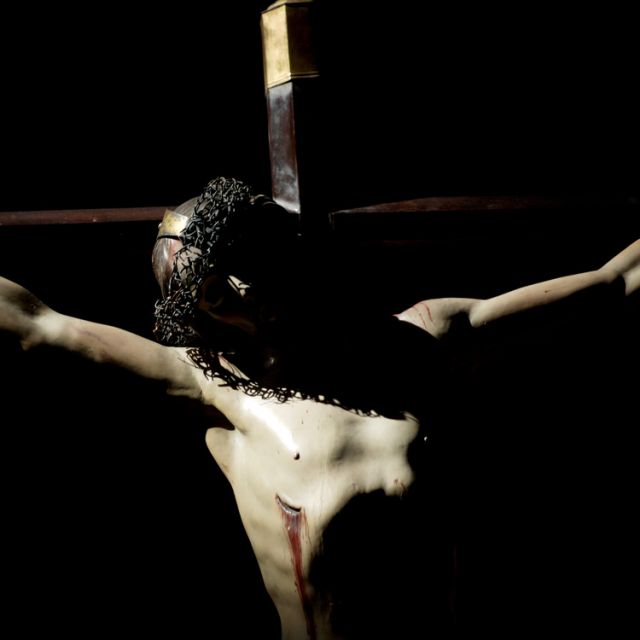
First, the British government announced that it would not give state and official legal defence to anyone who has lost their job for wearing a crucifix. The catalyst for this announcement was the firing of two women who wore small, hardly noticeable crosses around their neck. The jewellery did not interfere with their work, was not in any way a health and safety issue and had not led to complaints. But someone objected and the employees were told to remove these miniature emblems of Christianity. When they refused, their positions were terminated.
While ruling that if a Muslim woman was dismissed for wearing Islamic headgear she may well be entitled to an official defence, the government argued that a crucifix was not a religious necessity for a Christian and there was no human rights justification for a Christian to wear one. Muslim women, of course, are not required to wear elaborate head coverings, only to dress modestly, but this was not accepted by the British authorities.
The decision is breathtaking and distinctly anti-Christian. If a woman was told that her skirt was too short or shirt too revealing, she would have recourse to any number of appeal boards, and in reality it’s extremely unlikely that any employer would take the chance to comment, let alone threaten dismissal. But an exception to this working rule of common sense and compromise has been broken when it concerns Christianity. I used to think that British Christians were over-reacting, but no longer.
To confirm any suspicions we might have, the director-general of the BBC, Mark Thompson, gave a staggeringly candid interview in which he said that because Islam had “very close identity with ethnic minorities it is covered in a more careful way by broadcasters.” He continued, “Without question, ‘I complain in the strongest possible terms’ is different from, ‘I complain in the strongest possible terms and I am loading my AK47 as I write.’ This definitely raises the stakes.” In other words, those religions that threaten violence are less likely to be abused on Britain’s public broadcaster.
“The point is that for a Muslim, a depiction, particularly a comic or demeaning depiction, of the Prophet Mohammed, might have the emotional force of a piece of grotesque child pornography,” explained Thompson. When asked if he would be reluctant to air a satirical show about Mohammed, after the BBC had produced several similar shows mocking Jesus, the Church and Christianity, he replied, “Essentially the answer to that question is yes.” Well, at least he is honest.
This concerted attempt to remove Christianity from the public square has been startlingly successful in Britain and has won victory after victory for more than a generation. The Church of England is an emasculated and confused body, Evangelicals are a shadow of their North American siblings and so resistance is effectively in the hands of Roman Catholicism. It will be fascinating to see how the Church reacts, particularly in the light of Prime Minister David Cameron’s personal and political support for same-sex marriage.
Lessons for Canada? We’re in better shape here, but what infects Britain tends to make its way here before very long. What has been taken for granted is likely to be under direct attack quite soon, and we’re seeing the vanguard of the campaign in the attempt to force radical sex education and gay-straight alliances onto Catholic schools. Men used to run away to sea, then they ran away to the BBC, now they swim in the dirty waters of hypocrisy. Hold on to those crucifixes — you may need them sooner than you think.
Michael Coren