Edith Stein, modern Catholic woman
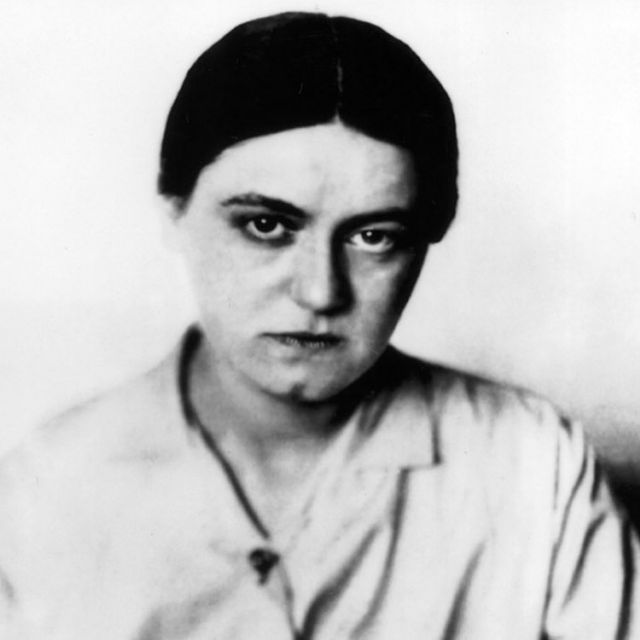
By Dorothy Cummings McLean
April 17, 2012
Dorothy Cummings McLean
As a German philosophy student, Edith Stein (1891-1942) was passionate about feminism. Her interest waned, however, as she concentrated on her philosophical work and explored Christianity. It was not until she had been baptized and had given up her academic career to teach in a convent school that she revisited the “Woman Question.” Her speculations formed part of a series of lectures that she gave to Catholic groups around Germany in 1931 and 1932 and decades later influenced the thought of a Polish philosophy professor named Karol Wojtyła. As Pope John Paul II, he promulgated an encyclical called Muleris Dignitatem, “On the Dignity of Women.”
Edith Stein is of interest to any Catholic woman wanting to be true to her faith, family and calling in modern society, for these were issues that faced Stein all her life. First, Stein’s embrace of the Catholic faith disappointed her non-Catholic family. Second, Stein lived to see tremendous changes in the position of women in her society. Third, she was one of the most brilliant students of the philosopher Edmund Husserl, and called to a traditionally “male” intellectual path. Fourth, the influence of family and her confessors led her to delay her ultimate vocation as a contemplative Carmelite nun. Her own dreams came second — for a time — to the wishes of those she loved and respected. Fifth, Stein was ultimately murdered by the state — Nazi-occupied Europe — when the Netherlands’ Catholic bishops spoke out against persecution of the Jews and, to teach them a lesson, the Nazis arrested the nation’s Jewish-Catholic converts, including the refugee nun.
The controversy around Stein’s Jewishness, conversion to Christianity, murder and subsequent canonization is unfortunate because it sidelines Stein’s thoughts about women and makes her seem solely a hotly contested victim of the Holocaust as opposed to a woman of our times. Like women today, Stein faced competing arguments about who women are and what our roles in society should be.
When Stein was born, German women had few adult rights. Suffragettes fought for woman’s emancipation until 1919 when German women became full citizens. The two competing views were that men and women were the same, and therefore women should be equal to men, and that women and men were different, and therefore women were not equal to men. Stein, however, argues that men and women are equal and different from each other.
This makes Stein the first important Catholic thinker to address the subject of women in the modern world. She approaches the subject as a trained philosopher who believes that experience can be studied and truth can be known. Before she addresses how men and women are different, she underscores that men and women share a common human nature and that every human person is unique: “No woman is only woman,” she writes. As a Christian, she uses biblical texts as resource material and even struggles with St. Paul where he seemed not to have fully understood how Christ has ended Adam’s post-fall tyranny over Eve.
Stein is no absolutist. She writes about “masculine” and “feminine” natures, saying not that men are this and women are that, but that men tend towards the masculine and women tend towards the feminine. The feminine nature has an orientation towards the personal and the whole, whereas the masculine nature was content with objectivity and compartmentalization. In short, the feminine nature is concerned with people and a holistic approach to life, whereas the masculine nature tends to focus one-sidedly on one idea or task.
Both natures complement each other, including in the professions. Stein argues that men and women should not be barred from any profession. She feels strongly that each person is uniquely suited to a particular profession, depending on his or her gifts.
Thus, although women in general are more likely to be suited to caring, holistic professions like medicine, certain men are also called to such professions. Likewise, certain women are called to male-dominated technical trades. She suggests, too, that professions could be improved by being approached in both feminine and masculine ways.
For Stein it is never a question of superiority. Both natures are good although, like all creation, in need of redemption. She finds in both certain harmful tendencies. And she argues that each person should develop the ideals of both feminine and masculine natures:
“Christ embodies the ideal of human perfection: in Him all bias and defects are removed, and the masculine and feminine virtues are united and their weaknesses redeemed; therefore, His true followers will be progressively exalted over their natural limitations. That is why we see in holy men a womanly tenderness and a truly maternal solicitude for the souls entrusted to them while in holy women there is manly boldness, proficiency and determination.”
Stein’s ideas are so sensible and suited to our times that she deserves widespread reading among Catholics looking for guidance about who men and women are called to be today.
Dorothy Cummings McLean