Survey reveals those called to serve getting younger and smarter
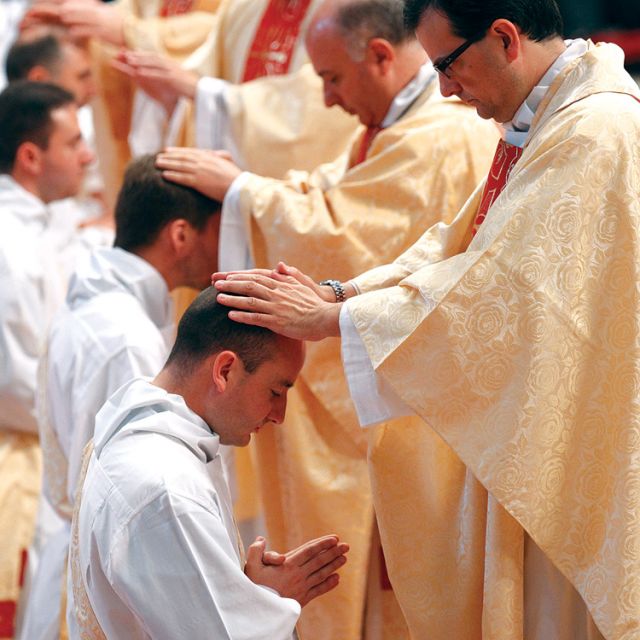
By Allison Hunwicks, The Catholic Register
April 21, 2012
TORONTO - A recent study out of the United States is showing that those entering religious orders and undertaking perpetual vows are younger and more educated than their predecessors of recent years.
“We are encouraged by the report’s findings that men and women are considering a vocation at a younger age,” said Mercy Sister Mary Joanna Ruhland, associate director of the U.S. bishops’ secretariat of vocations and consecrated life, according to Catholic News Agency.
The survey, which comes out of Georgetown University’s Centre for Applied Research in the Apostolate and was commissioned by the U.S. Conference of Catholic Bishops, looked at a number of men and women who entered religious orders in 2011. Of those surveyed, the study found that women entering vocations were averaging 39 years of age, and men were averaging 42 years. For women, that’s four years younger than those entering in 2010.
In addition, almost 60 per cent of those in the study had obtained a bachelor’s degree, while 16 per cent had also completed graduate studies and degrees as well.
Fr. Peter Marr, Vice Rector, Director of Pastoral Formation and Chaplain for the Diaconate Formation program at St. Augustine’s Seminary in Toronto, said that university success is common among entrants at St. Augustine’s.
“Generally, men that come into the seminary here already have their undergraduate degrees,” said Marr.
The study also noted that a great deal of those surveyed experienced a call to the religious life at a very young age, many of them at approximately 19 years of age.
“You know the truth is, what we need is families to say to their children, ‘of the many ways you can be happy in life... taking the religious life and the priesthood is one of those ways,’ ” said Marr.
This message strongly echoes that of Pope Benedict XVI in his message for the World Day of Prayers for Vocations.
“Families are not only the privileged place for human and Christian formation; they can also be ‘the primary and most excellent seed-bed of vocations to a life of consecration to the Kingdom of God,’ by helping their members to see, precisely within the family, the beauty and the importance of the priesthood and the consecrated life,” the Pope said on Feb. 13.
Marr also noted that despite the positive nature of younger vocational seekers, more individuals in general, regardless of age, is what is needed for the profession.
“We’ve prayed about it,” he laughed.