Rights league applauds decision to repeal controversial Section 13
By Deborah Gyapong, Canadian Catholic News
June 13, 2012
OTTAWA - The House of Commons voted 153-136 June 6 to repeal Section 13, the controversial hate-crimes provision of the Canadian Human Rights Act June 6, drawing praise from the Catholic Civil Rights League.
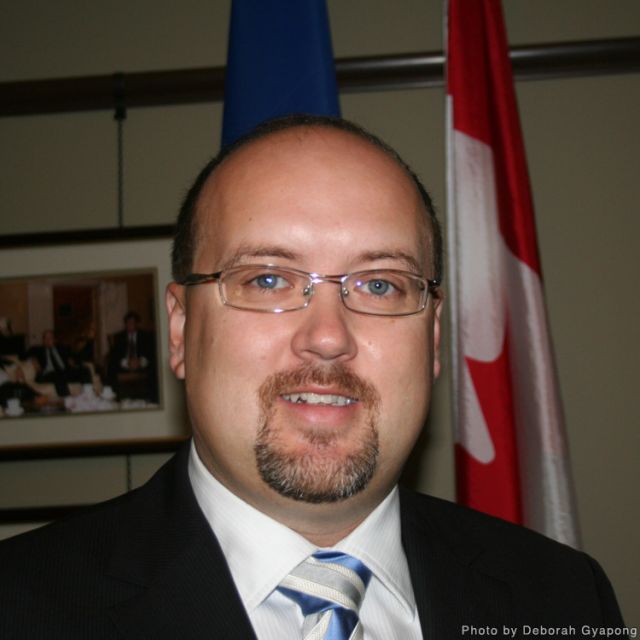
MP Brian Storseth’s private member’s Bill C-304 now moves to the Senate where it will be shepherded through by Conservative Senator Doug Finley.
“He’s been a strong advocate for free speech for a long time,” Storseth said. “I’m hoping it’s going to have strong support in the Senate.”
Under Section 13 any speech or communication such as that on the Internet that was “likely” to expose an identifiable group to hatred or contempt could be deemed discriminatory under the Act. Truth is not a defence, nor is intent, only a vague perception of potential harm to the complainant. Normal rules of evidence did not apply and the Tribunal member might not have any training in constitutional law.
“Human rights tribunals are not the appropriate forum for testing claims of hate speech,” said League executive director Joanne McGarry. “Criminal Code provisions regarding hate speech, libel and slander laws help ensure that complainant and defendant are on a level playing field with respect to costs, and that rules of evidence and procedure are followed.”
The League has intervened in a number of cases that started out as human rights complaints to provincial or federal bodies.
The League pointed out Section 13 has been used to penalize religious belief, including columns and articles written during the debate about same-sex marriage. Catholic Insight magazine spent about $40,000 defending itself against complaints for articles outlining Catholic teaching on homosexuality. Those complaints were later dismissed, but as many commenters have observed, the process of fighting a human rights complaint is the punishment.
In 2006, Maclean’s magazine faced complaints for publishing an excerpt of best-selling author Mark Steyn’s book America Alone. Steyn and the magazine also faced complaints of Islamophobia to the Ontario Human Rights Commission and the British Columbia Human Rights Tribunal, a form of triple jeopardy that cost the magazine an estimated $1 million in legal fees.
Had the complaints been successful, Steyn and Maclean’s could have not only been forced to pay compensation for the hurt feelings of their complainants, but could have received a lifetime ban on writing on that or similar subjects.
Storseth said he hopes provincial legislatures will follow the federal government’s lead and axe similar provisions in their own human rights legislation.
“This is where we are going to have to push for freedom of religion and expression,” Storseth said. “It’s critically important that we respect these fundamental freedoms.
“When it comes to tolerance in our society, it has to go both ways.”
Storseth praised the role the media has played in putting some “sunlight on these quasi-judicial bodies.”