Plea goes out for African famine aid
By Maria-Pia Negro, Catholic News Service
June 13, 2012
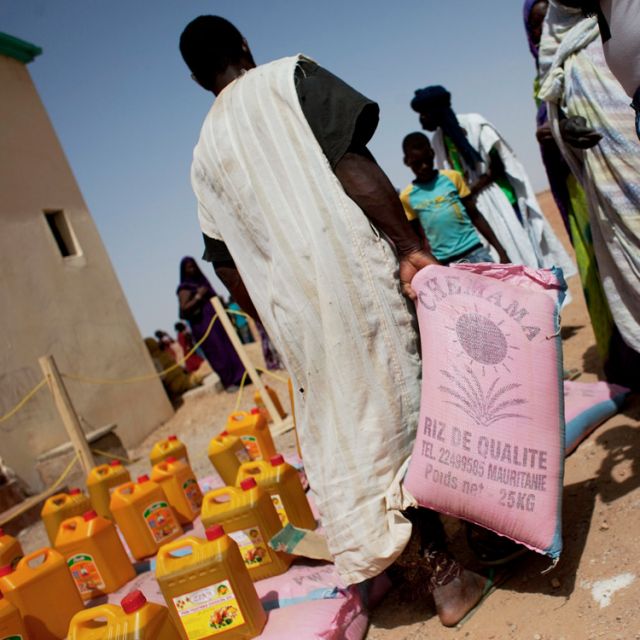
WASHINGTON - Millions of people in West Africa’s Sahel region face severe food shortages that could be catastrophic if international aid falls short in the coming weeks, according to representatives of Catholic and other humanitarian organizations.
“The crisis is already here. People are already starving in some parts of the region,” said Bill Worms, Sahel communications officer for Caritas Internationalis in Rome.
UN agencies estimate that 18 million people, including three million children, are at risk of hunger in parts of Chad, Niger, Mali, Burkina Faso, Senegal, Gambia, Mauritania, Cameroon and northern Nigeria.
Organizations like Caritas Internationalis, the Catholic Agency for Overseas Development and Catholic Relief Services are working to solve problems of hunger and malnutrition. Even with the humanitarian response, there still is not enough money to address the overwhelming need, said Bill Rastetter, CRS country representative for Niger.
As the food crisis in the region grows, food prices skyrocket in urban centres, making it almost impossible to get enough food in the Sahel, the area bordering the Sahara Desert. In March, families started rationing food to survive.
“We found families that couldn’t afford to eat more than once a day,” said Philippe Mougin, CAFOD’s senior emergency response officer for Africa.
CAFOD, the aid agency of the Bishops’ Conference of England and Wales, reported that families started selling their livestock, jewelry or farming equipment in order to afford food months ago, which makes them vulnerable to future crisis.
“Year after year we see people with less capacity to cope during the emergencies,” Mougin said, adding that the neighbourhood solidarity that helped the poorest families to survive in the past has decreased because everybody needs help.
Things could worsen in July and August, when most of the food stocks that have been at their lowest levels would be all but gone. As people wait for the September harvest, Rastetter said, even the aid from the international community could be exhausted, if more is not sent.
Caritas Internationalis, a confederation of Catholic relief, development and social service agencies, has launched appeals to help Mali, Burkina Faso and Niger. These countries have not yet recovered from the crisis in 2010 and last year’s failed harvest, Worms said.
Worms stressed the need to act quickly. Late responses to food crises in 2005 and 2010 resulted in unnecessary deaths in the region.
“We hope that the international community acts now instead of waiting as it has been the case for the last times,” he said.
The Canadian Catholic Organization for Development and Peace joined the Canadian Conference of Catholic Bishops in a joint emergency appeal in response to the food crisis in the Sahel. In a letter to the bishops of Canada, Archbishop Richard Smith, CCCB president, asked parishes to collect donations until mid-September.
In response to this humanitarian crisis, aid organizations have implemented work programs, seed banks, and seed and food vouchers in countries like Niger, where more than six million people could be affected by the food shortage.
The region has been influenced by Mali’s March military coup, which displaced more than 300,000 people, many of whom have fled to neighbouring Niger and Burkina Faso since rebel separatists took three towns in the North.
As the situation in Mali remains uncertain, humanitarian agencies are trying to help the displaced, “The areas under the rebels’ control are almost off limits to all humanitarian aid,” said Timothy Bishop, CRS country representative for Mali.