The good, bad, ugly: Church can't shy away from Twitter's Wild West
By Carol Glatz, Catholic News Service
December 13, 2012
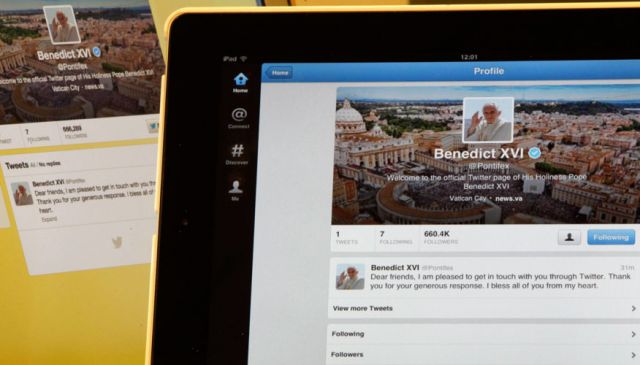
VATICAN CITY - With Pope Benedict XVI's new presence on Twitter, people from all over the world can now post papal messages with just the push of an on-screen button.
While many have welcomed the pope's foray into the virtual world, his @Pontifex handles and "reply-able" posts have also meant that rude and crude comments have come with the mix.
Twitter is "an open communications platform," and the Vatican has readily embraced what the full-fledged exercise of freedom of speech entails, said Msgr. Paul Tighe, secretary of the Pontifical Council for Social Communications, which organized and runs the pope's eight language-based Twitter accounts.
"We knew there would be negative stuff," he told Catholic News Service Dec. 13, the day after the pope first tweeted more than 1 million "followers." The number of followers of the pope's multi-language accounts nearly doubled to more than 1.7 million just 24 hours later.
The Irish-born Msgr. Tighe said that in sifting through the feedback, "what stuck with me most was all the lovely stuff," the positive and genuine comments and queries in the midst of the ugly.
Just because there is a negative side to new media doesn't mean the church should shy away, he said.
Social media has allowed people to be "very honest and even more than honest at times" in a very public way, he said. "But you can't abandon it and leave it at that. We have to see its potential to do good" as a tool for evangelization and as a global forum for respectful dialogue and debate.
The wrong approach would be to "chase after all the negative, and then let it define who you are," he said.
Pope Benedict, instead, has called on Catholics to engage online with respect and with a genuine and earnest spirit, the monsignor said.
He said the pope has even called on priests to do the digital dive, saying, "Let's give a soul to the Internet, not just content."
Msgr. Tighe suggested priests, religious and other Catholics "jump right in and answer people's questions" that have been submitted using the @Pontifex and #Pontifex tags. Sometimes, veiled under the sarcasm or criticism, are signs of "a genuine searching," he said.
"Just seeing what's being said can help you think through how to engage with people more positively," and it can offer insight into what prejudices or misunderstandings need addressing, he said.
"The church is more than Rome and the pope," he said, so people should feel free to pitch in, lend a hand with the outreach and help "raise the level of discussion."
The pope's new Twitter accounts also are the pope's way of encouraging people to engage, he said, and take part in the new evangelization in new ways.