A tale of two unhappy foreign students in Boston
By Dorothy Cummings McLean
May 2, 2013
Dorothy Cummings McLean
When the Boston bombing suspects were first named, they were granted the title “unhappy foreign students.” Before the details of the Tsarnaev brothers’ 10-year residence in the United States were revealed, pundits floated this theory as a way to encourage pity for them. After all, they were foreign.
“Give me a break,” I yelled at the Internet. “I was an unhappy foreign student in Boston.”
Boston, I hasten to add, is a beautiful city, across the river from even more beautiful Cambridge. It is a great place to visit. It might even be a great place to study if you don’t have a War of 1812 chip on your Canadian shoulder. The locals may treat new residents with genial impatience, but at least it is genial. If they sound rude, it’s because they think politeness sounds fake. The winter weather is hideous. Don’t visit in January.
It may seem strange for me to ponder what I had in common with the Tsarnaevs, especially Tamerlan, but as political correctness demands that I put myself in his outsider’s shoes, I’m complying.
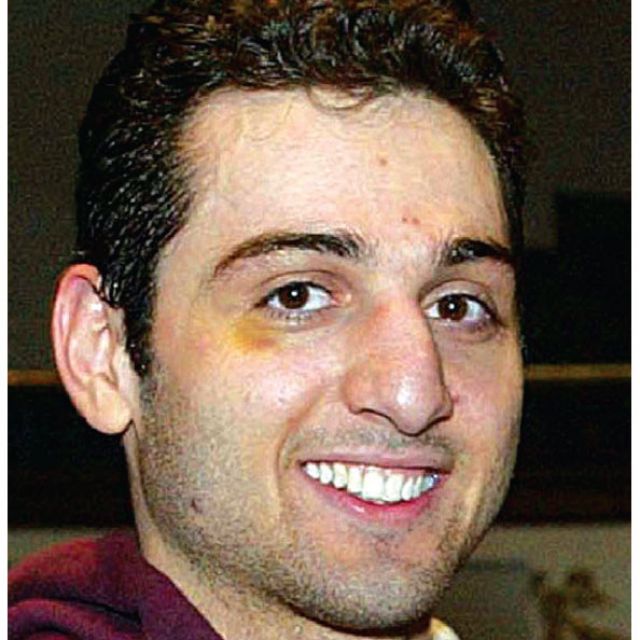
Tamerlan, the elder of the Tsarnaev brothers — the deceased first suspect in the bombings — arrived in Boston as a teenager in 2002, and I arrived as an adult in 2005. He dropped out of education to concentrate on boxing; I had long since dropped out of boxing to concentrate on education. Tsarnaev was a much better boxer than I ever was — he won the New England Golden Gloves in 2009 and 2010 — but I can tell you that his 2010 claim that he didn’t have any American friends must have been a big, fat, self-pitying lie. A boxing club is a very friendly place, with attention, encouragement and respect poured over young boxers by the bucketload. Tsarnaev also had an American girlfriend by then, although it seems that he was not a very good friend to her.
Tsarnaev was very religious and worshipped in Cambridge. I was also very religious and also worshipped in Cambridge. Tsarnaev was not satisfied with the theology he found at his mosque, and once caused a ruckus. I was not satisfied with the theology I found in the theology department of Boston College and frequently caused a ruckus. Tsarnaev wanted a stricter definition of Islam; I wanted a stricter definition of Catholicism. Tsarnaev became interested in radical Islamist violence; I also became interested in radical Islamist violence. I wrote two papers on the Mohammad cartoon crisis and asked such provocative questions as, “What if people were so afraid of Catholics they refused to publish newsworthy material we find blasphemous? We seem at times to sympathize with Islamic anger; should we therefore emulate it?”
The answer to that is, of course, no. We may feel righteous anger — a virtue according to St. Thomas Aquinas — at insults to God, to the most holy sacrament of the Eucharist, to the Blessed Virgin Mary, to the innocence of children and at the persecution of fellow Christians, but violence is not our answer, for it was not Christ’s answer. Membership in the Irish Republican Army, incidentally, brought Catholics the immediate penalty of excommunication.
This did not prevent many Catholic Irish-Americans and Irish-Canadians throughout the 20th century from donating money to the IRA. As vengeful people have sneered these past unhappy weeks, this happened in Boston. My reply to that is, “And in Toronto,” for in 1993 I turned down an invitation to a fundraiser for Sinn Fein. God only knows how many Canadian dollars flow to violent foreign organizations, thanks to certain romantic attachments of God knows how many Canadians for their, or their ancestors’, place of birth. No innocent person in any city deserves punishment for them.
As a child, I briefly had a romantic attitude towards the IRA, developed entirely from novels (like Leon Uris’s Trinity), sympathetic news coverage of hunger striker Bobby Sands and the school board’s insistence that students identify with the foreign countries of our ancestors’ origin. It is being reported that the Tsarnaevs’ mother encouraged them in their faith-based sense of grievance. Well, my mother sure slapped any romantic idea about the IRA out of me. And this is where, besides never having killed or maimed my neighbours, I find the greatest difference between Tamerlan Tsarnaev and my foreign-student-in-Boston self.
Young people are influenced by those they most respect, and that usually means parents and older siblings. Although adults frequently complain that children don’t listen to them, children have the habit of hearing adults at our worst. Children also very often develop an interest in their family origins or religious beliefs in ways their family might not expect or welcome. Adults need to practise parental guidance, not only with things kids hear from media, but with everything adults say — especially when the kids echo it with fervour.
(Cummings McLean is a Canadian writer and author of Seraphic Singles.)
Dorothy Cummings McLean