In Argentina, Francis’ impact goes beyond the spiritual
By David Agren, Catholic News Service
March 13, 2014
BUENOS AIRES, ARGENTINA - Maria Delamonica spoke somewhat sourly of the state of affairs in Argentina, where the economy is teetering and politics are polarized. But her voice brightened when the topic turned to Pope Francis and the changes in the country since he was unexpectedly elected one year ago.
“There’s been a revolution,” said Delamonica.
She cited changes such as friends showing an interest in their faith, once-fierce Church critics keeping their comments in check and people acting a little less ostentatiously — copying, in some way, the Pope’s austere example.
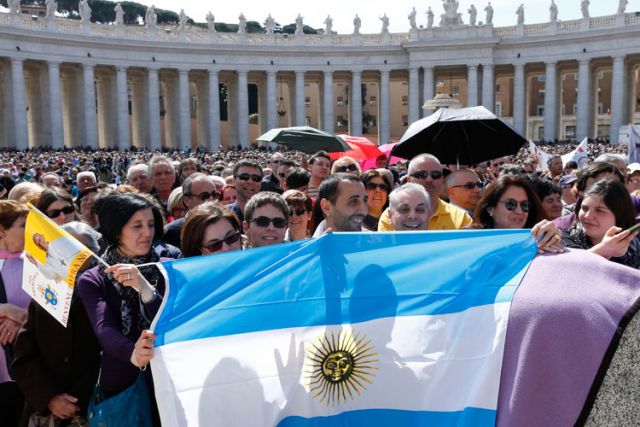
Argentines have embraced the election of Pope Francis — to the point that parents began naming babies “Francisco” in large numbers, priests report increased parish attendance and the previously antagonistic president and her supporters act as if he were an ally.
Opinions are split on whether enthusiasm is as much about patriotism and pride as it is spiritual renewal and people re-embracing religion, but its impact has gone beyond the spiritual realm.
“He brought a lot of hope to Argentina because he was elected during a time of great pessimism,” said Jose Maria Poirier, publisher of the Catholic magazine Criterio.
The Pope has brought people back into the pews, priests said, while thousands of Argentines signed up for trips to World Youth Day last year in Brazil. Participation in pilgrimages celebrating Our Lady of Lujan, the national patroness, also increased.
Exact figures on attendance are unavailable. Fr. Juan Issamendi of Buenos Aires’ Our Lady of Caacupe parish said the Pope’s preference for a poor Church and embrace of the informal makes the matter moot.
“The measure is not going to be by sacraments ... how many people are confessing,” he said. “It’s in the street,” where Pope Francis wants priests to take their ministries.
“It’s now more popular to be Catholic,” said George Hill, 30, a local government employee and volunteer in the shantytowns.