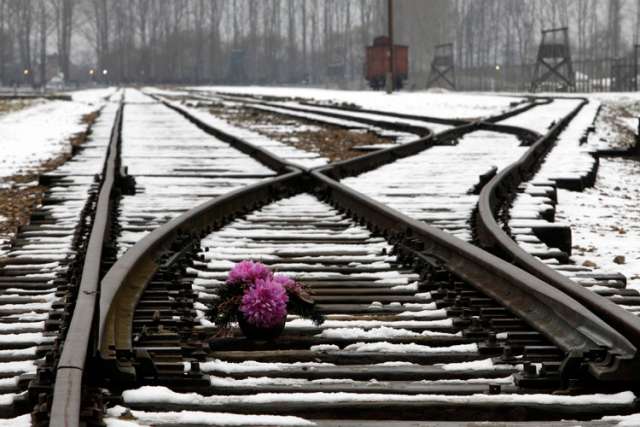
Auschwitz in spring remains a cry of despair
By Dorothy Cummings McLean
May 16, 2014
Dorothy Cummings McLean
When I first went to Krakow I was overwhelmed by the expectation that I wanted to hear about the Holocaust. I now understand this was because most North American tourists know the city as the backdrop to the film Schindler’s List. But back then I walked through the “Jewish Quarter” with increasing unease as my guides cheerfully pointed out the Jewish secondary school (closed 1939, never reopened), the kosher restaurants, the “working” synagogue and the kosher ice-cream stand. They found this last amusing.
“How do you make ice kosher?” the woman wondered aloud. Our male companion laughed, and I could swear I felt a hair turn grey.
My guide complained about the hoards of American and Israeli tourists who shrug off the suffering of Catholic Poles during the Second World War. The woman was worried that I didn’t know about it; I assured her that I knew about it. But I did not tell her that every time she mentioned the Jews I cringed. Not only do Canadians have unspoken rules about how we speak about Jews, we also worry about how others speak about Jews. And, on this first visit to Poland, I did not want to hear Poles speak about Jews. When asked if I would like to see Schindler’s factory, I stated firmly that I would like to see churches.
I am not competent to write about the uneasy relationship between Catholic Poles and the Jews of Poland, twin victims of the German and Soviet invasions of Poland. However, I know enough about Polish history to understand what a shocking insult it was when American President Barack Obama refered to a Nazi concentration camp near Lubin as “a Polish death camp.” The Poles spent the war a subjugated people; they had no death camps. And more than 100,000 Poles were murdered in Auschwitz alone.
Dorothy Cummings McLean