Focus on Islamic extremists diverts attention from South Sudan’s growing crisis
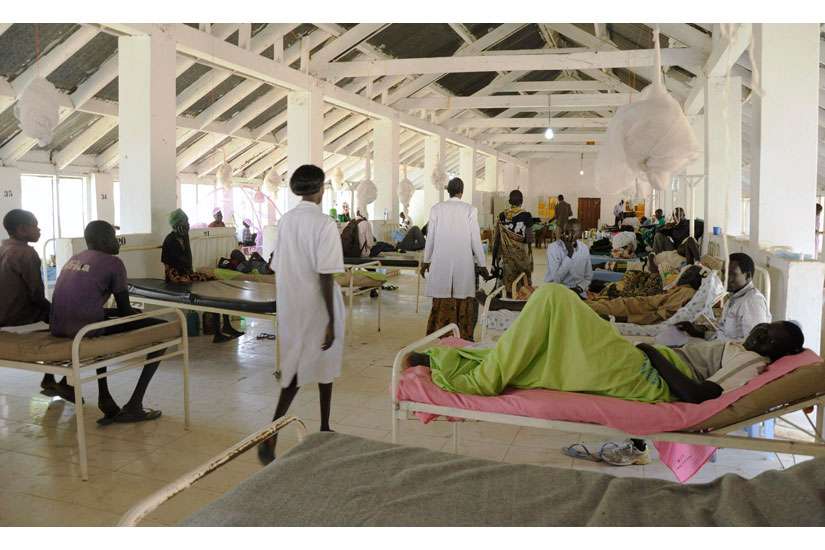
By Fredrick Nzwili, Religion News Service
February 5, 2015
As world attention shifts to the growing influence of Muslim militant groups on the African continent, few have paid any attention to the ongoing bloody conflict in South Sudan.
An estimated 50,000 people have died and two million have been displaced in the latest phase of fighting in this nation, according to the International Crisis Group, a think tank that aims to prevent and resolve such conflicts. That’s about five times more than in northern Nigeria, where the Islamist militant group Boko Haram has killed more than 5,000 people in six years.
“South Sudan’s conflict is not getting much attention due to shifting interests towards Islamic extremism,” said the Rev. Fred Nyabera of Kenya, a social scientist who is director of the Interfaith Initiative to End Child Poverty at the global faith-based organization Arigatou International.
“This has become a global issue because of the immediate threats it poses to nations.
“But leaving South Sudan alone at this time when the people are trying to define their identity and country, under very fragile circumstances, is to postpone a big problem,” Nyabera added.
On Feb. 2, South Sudan President Salva Kiir and his former deputy — now rebel — Riek Machar signed a peace agreement in Addis Ababa, Ethiopia, that proposes a coalition government. A power struggle between the two sparked the fighting in December 2013.
Within months, the violence took on an ethnic dimension, with government troops largely from Kiir’s Dinka tribe and the rebels from Machar’s Nuer tribe engaging in deadly clashes.
“Like many of the conflicts in Africa, the South Sudan conflict is a politically motivated tribal war,” said Sheikh Abdallah Kheir, a religious scholar at Kenyatta University in Nairobi.
Since then, the parties have signed and broken six peace agreements.
But the peace negotiations leading to the pacts have concentrated on Kiir and Machar, leaving out key stakeholders such as religious groups, nongovernmental aid organizations and community leaders.
“As long as the prospects of peace are seen as preserve of the two, then the prospects of peace will remain bleak,” said Nyabera.
Sixty per cent of South Sudan residents are Christian, 33 per cent follow traditional African religions and six per cent are Muslims, according to the Pew Research Centre.
South Sudan became an independent state in July 2011 after voting to secede from Sudan in a referendum. But independence has not brought stability to the region, ICG said in its Jan. 29 report.
According to the South Sudan Catholic bishops, the war is about power, not about the people.
“The aspirations of individuals and factions have led to a cycle of revenge killing,” said Roman Catholic Archbishop Paulino Lukudu Loro of Juba said in a statement on Jan. 30.
“We say to all who are involved in any way: if you continue fighting you will finish yourselves and you will finish the nation. The nation needs to be salvaged from this sin.”