What exactly did Loyola College win?
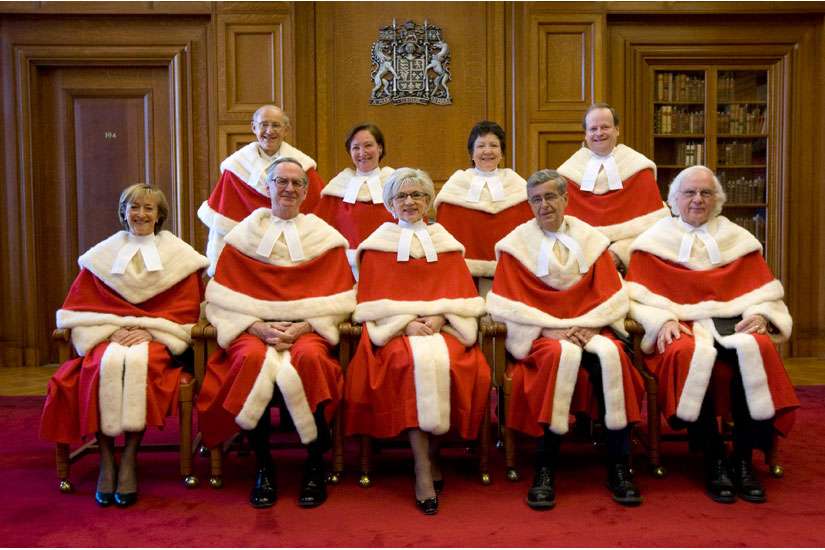
By Ian Hunter
April 16, 2015
Guest Columns
Now that I am under no professional obligation to read court decisions, I generally avoid them. The turgid prose, the unctuous self-regard and the complacent sense of judicial superiority I find unpleasant and soporific.
But I made an exception and read the Supreme Court of Canada’s decision in the Loyola College case because it is being hailed by many Christians as a victory for religious freedom. Not so fast, I say.
Loyola is a Catholic boy’s high school. Since the school’s founding in the 1840s it has been administered by the Jesuits.
Most students who attend Loyola come from Catholic homes.
Since 2008, the Quebec Minister of Education has required all schools to teach a program called Ethics and Religious Culture (ERC), a program that seeks to inculcate in students “openness to human rights, diversity and respect for others.” The ERC program requires teaching of world religions, ethics and (that old chestnut of desiccated liberalism) “dialogue.” Those who teach the ERC program must not advance the truth of any religion.
Only a skilled judicial contortionist could reconcile this mandate with the catechism and the mission of the Roman Catholic Church (whose founder, I recall, did not say: “No one comes to the Father but by comparative religion”).
Nevertheless our elite judges on the Supreme Court, who have spent a lifetime reconciling the irreconcilable, considered themselves up to the task.
Guest Columns