Eucharist is not an entitlement
By Fr. Raymond J. de Souza
June 4, 2015
Fr. Raymond de Souza
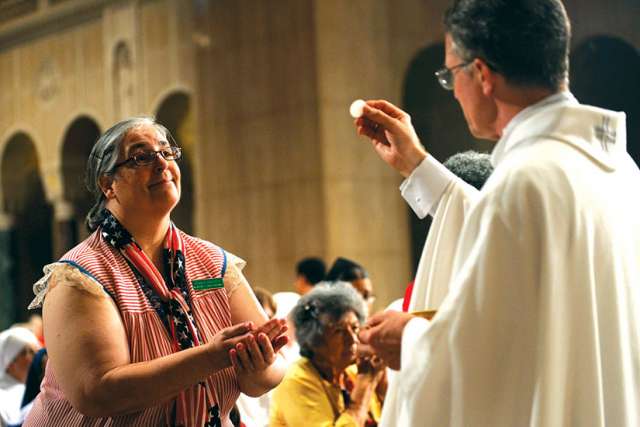
On the solemn feast of Corpus Christi a counterintuitive thought occurs: Are too many people receiving Holy Communion too often?
As this feast of the Body and Blood of the Lord Jesus falls between the two Synods on the Family, the thought occurs because of the great preoccupation with the question of Holy Communion for the divorced and civilly remarried.
The teaching and practice of the Church is rather clear. In order to receive Holy Communion, a Catholic must be in a state of grace, meaning that no mortal sins have been committed. If one is in a state of mortal sin, then it is necessary to have those sins forgiven in the Sacrament of Reconciliation before receiving Holy Communion. That discipline is based on the clear teaching of St. Paul, who says that to receive the Eucharist unworthily is to invite condemnation (1 Corinthians 11:29).
The situation of the divorced and civilly remarried is as follows. Having contracted a valid marriage, they are now living in a conjugal union with another person. Though they may not regard it is as such, they are in an adulterous union, as indicated by the words of Jesus Himself (Mark 10:11-12; Matthew 19:8-9).
As adultery is a mortal sin, the civil remarriage — which is not a marriage at all in the eyes of God — precludes reception of Holy Communion. The serious sin of adultery, like all sins, cannot be forgiven in the Sacrament of Reconciliation unless there is a purpose of amendment. So just as one cohabiting in a conjugal relationship outside of marriage cannot not be forgiven in the Sacrament of Reconciliation if he neither desires nor intends to cease the sinful behaviour, so too a civilly remarried person cannot be absolved in confession if he does not intend to end the non-valid “marriage.”
Fr. Raymond de Souza