Quebec bishop warns of ‘culture of death’ surrounding assisted suicide
By Evan Boudreau, The Catholic Register
November 9, 2016
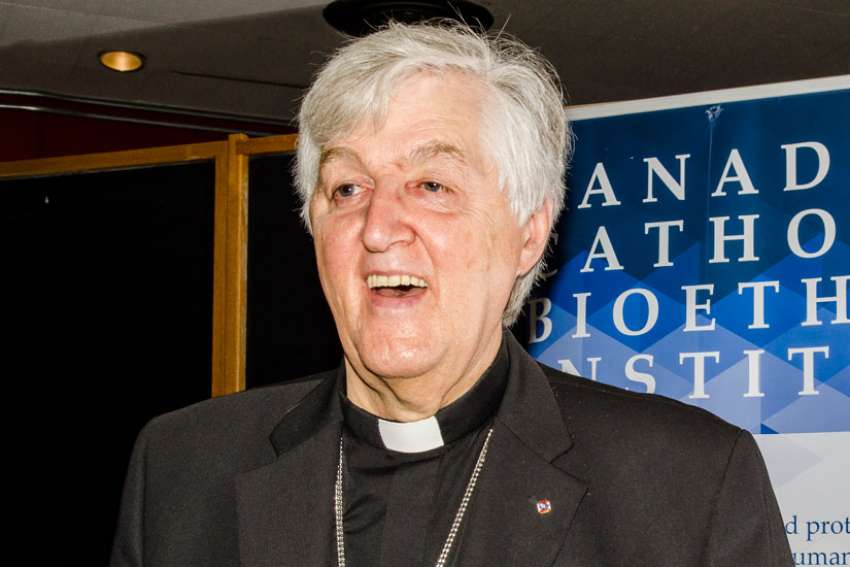
A “culture of death” is threatening the lives of our elderly, warns Bishop Noel Simard.
The legalization of assisted suicide in Canada has put many seniors at risk of missing out on their golden years and its opportunities for growth.
“We’re living in a culture of death,” said Simard, the bishop of Valleyfield, Que., and former bioethics professor at Ottawa’s Saint Paul University. “Euthanasia shows us that we are immersed in a culture of death. (And) the elderly are at risk of being forgotten.”
Simard made his remarks during a lecture at the University of St. Michael’s College on Nov. 2, hosted by the Canadian Catholic Bioethics Institute.
Rather than assisting premature death, people should focus on accompanying others through the aging process and help them to find meaning in growing old, he said.
“Don’t be afraid to provide spiritual accompaniment,” said Simard. “It is very important to accompany people and help them find what is the meaning of their suffering and meaning of their life.”
Aging is an essential part of being a human person, he added, and needs to be understood as a time of growth rather than total decline.
“We need to speak about the sanctity of life. (That) a person is a person, an elderly person is a person. Respect is very important.”
Simard warned that many elderly do not recognize euthanasia as morally wrong because of the confusion created by referring to it as medical aid in dying.
The elderly “are still capable, still need to be informed, they are competent and we have to be honest with them,” he said.
Palliative care, he noted, can easily go beyond just the physical.
“We need to understand care and healing,” he said. “Palliative care is no longer about just care but rather healing in the form of reconciling. We need to help people hear the word of God.”