Prison mission conference coming to Toronto
By Luc Rinaldi, Catholic Register Special
June 8, 2011
TORONTO - When it began more than 30 years ago, Prison Fellowship International was only a handful of national prison ministries that shared a common vision of sharing Christ with the incarcerated. In 2011, representatives from more than 115 countries who now share that vision will gather in Toronto for the fellowship’s international convocation.
From June 28 to July 2, the Sheraton Centre Toronto Hotel will play host to the ninth quadrennial PFI Convocation, where prison ministers will explore their mission of bringing Christ to prisoners, ex-prisoners, victims and their families.
“It’s really a forum for people from various backgrounds, experiences and types of programs to share their stories, their best practices, program models and ideas,” said Ron Nikkel, the president and CEO of PFI. “It becomes a gigantic mixing bowl of creativity and ideas.”
PFI, the world’s largest criminal justice ministry with more than 50,000 volunteers, will feature a variety of speakers throughout the five-day conference, including Rev. Pierre Allard, prison chaplain and former president of the International Prison Chaplains’ Association, and Philip Yancey, Christian author and journalist. Participants will also take part in a number of workshops teaching effective practices and leadership skills for use in prison ministry.
The Washington, D.C.-based interdenominational organization will also use the conference to recognize ministries around the world that best exemplify PFI’s vision of providing a reconciling and restoring community for those involved in and affected by crime.
This vision isn’t always a popular one, said Nikkel.
“Why help prisoners?” is a question he’s commonly asked, to which Nikkel responds, “Is what we’re doing right now working?”
“You look at the Canadian criminal justice system, and it’s very much tending to follow the American model: build more prisons, build bigger prisons, keep people in prisons longer,” said Nikkel, an Alberta native.
“People don’t understand that the way we do justice really isn’t making a difference. It’s punitive. Punishment doesn’t make a complete sentence.”
It was the prevalence of these misconceptions that drew Nikkel to prison ministry.
“What appealed to me was the challenge of it all,” he said. “It seemed impossible. It was kind of daring, it was kind of daunting.”
While the 2011 PFI Convocation is proof of the significant progress the organization has made since its creation in 1976, PFI is far from being “done.” Studies show 70 per cent of released prisoners return to prison within three years, and in Venezuela, a member country of PFI, it’s estimated that more than 360 prisoners are killed each year — about one a day.
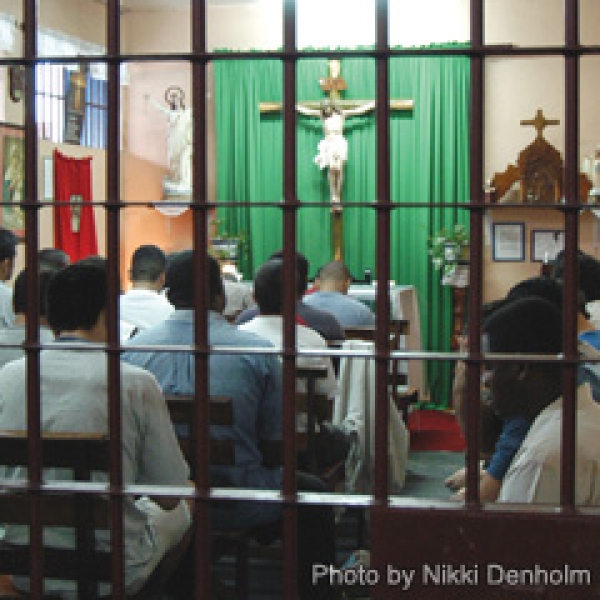
The solution, said Nikkel, is reconciliation, which PFI provides through its programs. In addition to providing a Christian environment for prisoners through Masses and other religious programs, PFI teaches skills such as auto mechanics and baking. For abandoned children of offenders, PFI provides homes. And through PFI, victims are able to tell their story to prisoners.